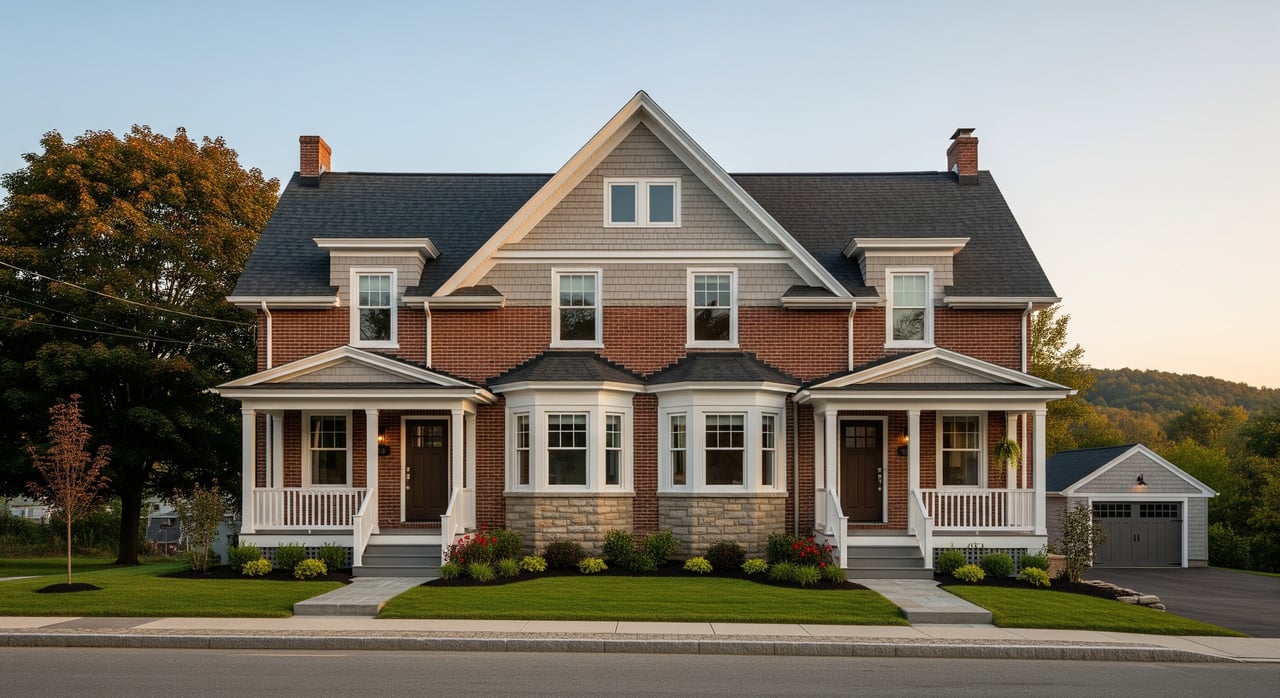
Looking at a Moosic duplex and wondering if the numbers will actually work? You are not alone. Duplex deals can be attractive, but only if you run the right local data and stress test your assumptions. In this guide, you will learn the exact steps to underwrite a Moosic duplex, where to find reliable numbers, and how to check returns before you write an offer. Let’s dive in.
What drives duplex demand in Moosic
Moosic sits in the Greater Scranton area with quick access to I‑81, regional employers, retail, and recreation around the Montage Mountain corridor. These connections support renter demand, but demand still depends on the economy across Lackawanna County. Before you underwrite, scan county employment trends, the age and condition of local housing, and any new development or zoning changes that could affect supply.
Key checks to start:
- Employment and unemployment trends for Lackawanna County.
- Major employers and commuting patterns into Scranton and nearby towns.
- Age, condition, and typical layouts of small multifamily stock in NEPA.
- Vacancy trends and the prevalence of single-family homes used as rentals.
Start with reliable local data
Build your numbers from primary sources rather than guesswork.
- Demographics and renter share: review the U.S. Census American Community Survey. The ACS provides household income, renter and owner rates, and population trends. Use the ACS program page as your entry point: American Community Survey.
- Rent benchmarks: check HUD Fair Market Rents for a baseline by bedroom count, then pull current Moosic and nearby comps that match beds, baths, parking, and utilities.
- Employment context: scan county-level data through Bureau of Labor Statistics unemployment series to see recent job momentum or softness.
- Property taxes: request the actual annual tax bill from the Lackawanna County assessor for the subject property. Do not estimate from millage rates alone.
- Local rules: confirm with the Borough of Moosic whether rental registrations, inspections, or certificates of occupancy apply and how often.
Step-by-step underwriting framework
Follow a consistent process so your numbers stay objective and comparable across properties.
1) Set market rents
- Pull 6 to 12 active or recent leased comps within a tight radius that match unit size, condition, and included utilities.
- Adjust your rent assumptions for parking, in-unit laundry, and renovations.
- If leases exist, compare in-place rents to market and note any near-term upside.
2) Build income: PGI to EGI
- Potential Gross Income (PGI) = sum of market rents for both units × 12.
- Vacancy and credit loss = PGI × your vacancy rate. Many small-market duplexes start at 5 to 10 percent when you lack history.
- Effective Gross Income (EGI) = PGI − vacancy and credit loss + other income such as parking or laundry.
3) Estimate operating expenses
Create a line-by-line budget. Replace estimates with actual invoices as you collect them.
- Property taxes: use the current county tax bill for the property.
- Insurance: obtain quotes that reflect the building’s age, systems, and claims history.
- Utilities: confirm who pays heat, electric, and water or sewer. Ask for 12 months of seller utility bills.
- Maintenance and repairs: many small multifamily owners budget 5 to 10 percent of EGI. Older NEPA structures may require the high end of that range.
- Management: self-managing can be 0 to 6 percent; third-party management is commonly 8 to 12 percent of EGI for small buildings.
- Reserves for replacement: budget per unit, often 250 to 600 dollars per unit per year, depending on condition and upcoming capital items.
- Legal, accounting, advertising, and supplies: include a modest but real annual line.
4) Calculate NOI and cap rate
- Net Operating Income (NOI) = EGI − operating expenses.
- Cap rate = NOI divided by purchase price. Compare your result with recent local duplex and small multifamily sales to gauge valuation.
5) Layer in financing and returns
- Annual debt service = monthly mortgage payment × 12. Use your lender’s current rate and amortization.
- Debt Service Coverage Ratio (DSCR) = NOI ÷ debt service. Many lenders target a DSCR of roughly 1.15 to 1.25 for small rentals, but confirm locally.
- Cash Flow Before Tax (CFBT) = NOI − debt service.
- Cash-on-cash return = CFBT ÷ cash invested. Cash invested includes down payment, closing costs, and initial repairs.
6) Run sensitivity checks
Stress test your deal with realistic ranges:
- Rents ±5 to 10 percent.
- Expenses ±10 to 20 percent.
- Interest rate ±50 to 100 basis points.
- Re-run DSCR, cash flow, and cash-on-cash each time and note your breakpoints.
A simple duplex deal calculator
Use a simple worksheet or spreadsheet to keep your analysis consistent. Structure it so you can toggle investor financing versus owner-occupant financing.
Inputs:
- Unit A and B market rents
- Other income (parking, laundry)
- Vacancy rate
- Property taxes
- Insurance
- Owner-paid utilities
- Management fee (percent or fixed)
- Maintenance and repairs
- Reserves per unit
- Other expenses
- Purchase price
- Closing costs
- Initial repairs or rehab
- Down payment percent or loan amount
- Interest rate and amortization term
Outputs:
- PGI, vacancy, EGI
- Total operating expenses and NOI
- Cap rate and Gross Rent Multiplier
- Annual debt service and DSCR
- Cash Flow Before Tax
- Cash-on-cash return
Expense assumptions that fit Moosic
Start with conservative estimates, then swap in real numbers once you have documents.
- Taxes: pull the subject property’s last two tax bills directly from the county. If a reassessment is likely, model the expected change.
- Insurance: request multiple quotes. Older roofs, chimneys, boilers, or prior claims can move the premium.
- Utilities: base estimates on actual 12 to 24 month bills. Clarify fuel type for heat and hot water.
- Maintenance: budget the high end of the range if mechanicals are older or if the property has deferred exterior items, such as roofing or masonry.
- Management: if you plan to self-manage, include a management line anyway. This protects your pro forma and makes your numbers comparable with managed assets.
- Reserves: set aside funds for capital items with known life cycles, such as roofs, heating systems, electrical upgrades, and windows.
Financing options for 2-unit purchases
- Conventional investor loans: higher down payments and rates than owner-occupied loans. Lenders may underwrite using a percentage of market rents and a vacancy factor.
- Owner-occupied financing: living in one unit can open lower down payments and sometimes better rates. FHA options exist for 2-unit properties, subject to occupancy, appraisal, and condition requirements.
- DSCR expectations: small rental lenders often look for a DSCR of 1.15 to 1.25, but programs vary. Ask local banks and credit unions that portfolio small-multifamily loans.
- Lender policy checks: confirm how they credit rents, their required reserves, maximum LTV, and any seasoning rules.
Due diligence checklist
Documents to request before you offer:
- Current rent roll with lease terms, deposits, and payment status
- Copies of leases and move-in inspections
- 12 to 36 months of income and expense records, if available
- 12 to 24 months of utility bills and the current tax bill
- Assessment history and any pending appeals
- Rental registration, certificate of occupancy, and code compliance records
- Seller’s property disclosure and lead-based paint disclosure for pre-1978 buildings
- Repair logs, invoices, capital improvements, and warranties
- Any surveys, parcel maps, easements, or open permits
- Insurance loss runs and any environmental disclosures
Site-level inspections:
- General home inspection by a pro who knows older NEPA housing
- HVAC or boiler inspection by a qualified technician
- Sewer or septic inspection, depending on connection type
- Lead-based paint risk assessment for pre-1978 properties when planning renovations
- A local code check with Moosic for licensing and inspection schedules
Verification steps:
- Confirm security deposits are held according to Pennsylvania law. For the legal framework, review the Pennsylvania Landlord and Tenant statutes.
- Verify zoning allows the current two-unit use. Check for any variance or legal nonconforming status.
- Cross-check rent roll with bank deposits or 1099s, if provided.
Risk checks and how to mitigate
Common risks with Moosic duplexes include deferred maintenance, older mechanicals, turnover that can cut income in half, and county-level employment shifts. You can reduce risk by building strong reserves, getting thorough inspections, and validating every expense line with bills or quotes. Add a property manager quote to your underwriting so you are ready if you cannot self-manage. Finally, run best, base, and worst-case scenarios and confirm the deal still meets your return targets under stress.
Your next steps in Moosic
- Pull the last two tax bills from the county and use the actual figures.
- Gather 6 to 12 rent comps in Moosic and adjacent Scranton neighborhoods, adjusting for utilities and condition.
- Request 12 months of utility bills from the seller and replace estimates with real data.
- Price out obvious repairs with at least one contractor quote and update your reserves.
- Speak with local lenders about current programs, DSCR minimums, rent-crediting rules, and rates for 2-unit properties.
- Confirm Moosic rental licensing and inspection requirements so you budget compliance correctly.
If you want a clear, local read on a specific Moosic duplex, reach out. As a boutique practice focused on Greater Scranton, we can help you source comps, organize due diligence, and negotiate with confidence. Schedule a quick consult with Michael S Taluto to talk through your numbers and next steps.
FAQs
What cap rate should I target for a Moosic duplex?
- Start with cap rates implied by recent local duplex and small multifamily sales, then adjust for property condition and risk. Your target should also reflect your financing terms and return goals.
How do I estimate vacancy for underwriting in Moosic?
- Use 5 to 10 percent as a conservative starting point when you lack history, then refine with current MLS trends and local property manager input.
What DSCR do lenders expect on a 2-unit rental?
- Many small rental lenders look for a DSCR around 1.15 to 1.25, but programs vary. Ask local banks and credit unions about their specific thresholds and rent-crediting rules.
Where can I find reliable rent benchmarks?
- Combine a HUD Fair Market Rent baseline with current Moosic comps that match beds, baths, parking, and utilities. Always adjust for condition and included services.
How do I verify property taxes in Lackawanna County?
- Request the actual tax bill for the subject property from the county assessor, and review the assessment history to anticipate any changes.
What documents should I review before offering on a duplex?
- Ask for the rent roll, leases, 12 to 24 months of expenses and utilities, tax bills, repair and capital improvement records, rental registrations, and inspection or code compliance records.